BMW 72440097 Engine Air Intake Intercooler 8092584 G82 G83
fits model: M3, M4, G80. make: Bmw. year: 2021–2024.
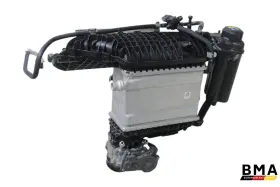
( Type: Intake Manifold ), ( Oe/oem Part Number: 17518092584 ), ( Color: Black ), ( Manufacturer Part Number: 72440097 ), ( Material: Plastic ), ( Placement On Vehicle: Front ), ( Fuel Type: Gasoline ), ( Additional Part Number: 8053336 )
Review BMW G82 G83 Engine Air Intake Intercooler Assembly Oem fits M3 M4 G80 2021–2024
The BMW 72440097 engine air intake intercooler is an essential component of the BMW M3, M4, G80, G82, and G83 models manufactured from 2021 to 2024. Designed and engineered by BMW, this intercooler is a key element of the high-performance cooling system for these vehicles. Its primary function is to cool the pressurized air that enters the engine in order to optimize its combustion efficiency and overall engine performance.
The BMW 72440097 engine air intake intercooler features a sophisticated design that ensures efficient cooling even under high-stress driving conditions. It utilizes large, thin-walled cooling tubes that enable effective heat exchange within the compact design. The intercooler core consists of multiple rows of finned aluminum, which maximizes the surface area for heat dissipation. The design also includes an integrated bypass system for optimized flow rate and pressure regulations when the engine demand decreases.
The intercooler's robust construction ensures a long service life. It is made from durable materials such as high-strength aluminum, incorporating sleeved tubes for improved resistance to thermal shock and the effects of extreme temperatures. The intercooler housing is reinforced to withstand the pressures and loads encountered within the BMW engine bay.
Installation of the BMW 72440097 engine air intake intercooler is straightforward, thanks to its OEM design. This ensures a perfect fit with all the factory connections, including air ducts and engine hoses. Essentially, you're receiving a direct replacement that matches the design and hardware of your BMW's original intercooler.
The impact of using an original BMW 72440097 engine air intake intercooler extends beyond engine performance. Having the flexibility to strip the intercooler down for maintenance, cleaning, or diagnostic checks can be crucial for ensuring your BMW stays in prime condition. Keeping your engine air intake intercooler in excellent condition directly contributes to a sustained high level of power and fuel efficiency, not to mention the resale value of your vehicle.
Confidence: 100%
Pros and Cons of Buying BMW M3/M4 G80/G82/G83 Engine Air Intake and Intercooler Upgrade (2021-2024)
Introduction:BMW M3, M4, G80, G82, and G83 models come equipped with powerful engines that deliver impressive performance. However, some enthusiasts aim to enhance their vehicles' power output and cooling efficiency by installing aftermarket engine air intakes and intercoolers. In this analysis, we explore the advantages and disadvantages of investing in a BMW M3/M4 G80/G82/G83 engine air intake and intercooler upgrade for the years 2021 to 2024.
Pros:1. Increased Power and Torque: An upgraded air intake and intercooler system allows for more efficient airflow and cooling, ultimately leading to increased horsepower and torque across the entire power band.
2. Improved Throttle Response: With better air intake and enhanced intercooler efficiency, the engine responds more quickly to throttle inputs, resulting in smoother and more responsive acceleration.
3. Enhanced Engine Sound: High-flow air filters and upgraded intercoolers can produce a more satisfying engine note by providing a freer-flowing air intake and reducing intake restrictions.
4. Improved Engine Protection: By maintaining consistently cooler engine temperatures, an efficient intercooler setup can help reduce the risk of engine damage associated with excessive heat.
5. Customization and Aesthetics: A custom engine air intake and intercooler setup not only offers performance benefits but also provides a visually appealing upgrade for enthusiasts.
Cons:1. Cost: Upgrading the engine air intake and intercooler system can be an expensive modification, especially when considering the cost of high-performance aftermarket parts and labor.
2. Potential Voiding of Warranties: Installing aftermarket parts may lead to the voiding of BMW's factory warranty, which could result in additional expenses for potential repairs during the coverage period.
3. Installation Complexity: Depending on the chosen components and individual experience levels, the installation process for a BMW engine air intake and intercooler system can be quite intricate and time-consuming, potentially requiring professional assistance.
4. Potential Negative Impact on Fuel Efficiency: While performance benefits come with an air intake and intercooler upgrade, an increased power output may lead to decreased fuel efficiency for some individuals.
5. Increased Engine Noise: While some individuals might find the enhanced engine sound appealing, others may experience excessive engine noise with certain air intake configurations, which could potentially lead to an uncomfortable driving experience.
Conclusion:BMW M3, M4, G80, G82, and G83 owners seeking to enhance their vehicle's performance via an air intake and intercooler upgrade must carefully weigh the pros and cons outlined above. Though the benefits of increased power, improved throttle response, engine protection, and customization might be attractive, the cons, such as cost, complexity, and potential decreased fuel efficiency, should also be seriously considered before making a decision. Ultimately, it's essential to conduct thorough research and consult trusted automotive professionals to determine if this modification aligns with your specific driving preferences, budget, and goals.
Recommendation:For those who are serious about the benefits and are willing to invest the time, effort, and financial commitment required for an engine air intake and intercooler upgrade, they should research reputable aftermarket manufacturers and seek out professional installation services. Additionally, exploring upgrades specifically designed for BMW models and ensuring they meet the necessary compatibility requirements can lead to a successful modification experience. Those who are unsure or uncertain about the benefits and drawbacks should carefully consider other options, such as software upgrades or exhaust systems, that may offer similar improvements with less complexity.
Details:
part #: 72440097 prices
- $389.17-$500.00
specifications inputmanifolds:
- for models: M3, M4, G80
- for makes: Bmw
- for years: 2021-2024
- type: Intake Manifold
- oe/oem part number: 17518092584
- color: Black
- manufacturer part number: 72440097
- material: Plastic
- placement on vehicle: Front
- fuel type: Gasoline
- additional part number: 8053336
seller inputmanifolds:
- city: North Highlands, California
- rating: 99.6%
- # reviews: 10219
offer inputmanifolds:
- started: September 25, 2024
- quantity: 1
- availability: In Stock
- options: Ship-to-home
- best offers: True
- sold: 0
general inputmanifolds:
- Car Truck Parts Accessories > Air Fuel Delivery > Intake Manifolds
- condition: Used
shipping inputmanifolds:
- class: Standard
- type: Fixed
- cost: $0.00
- carrier: USPS
- service: USPS Ground Advantage
- transit: 6-10 Days
returns inputmanifolds:
- time: 30 Days
- paid by: Buyer
- policy: Returns Accepted
payments inputmanifolds:
- credit card: Mastercard
- wallet: Paypal
- other
Bmw 72440097 Is Similar To:
- Motorking Seap-apd058rks D058rks For Bmw Air Intake Flap Adjuster Unit Disa Valve Repair Kit And O-ring (26.6% similar) Ignition coils distributors. Door lock actuators. Warranty - would be one time replacement. Driveshafts parts. Sensors - engine management. Windshield washer system. Door handles - outside. Engine mechanical. Fuel delivery system. Interior switches. Tailgate handles...(June 4th, 2024)
- Motorking Semc-mcd057rks For Bmw 3.0 Air Intake Flap Adjuster Unit Disa Valve Repair Kit And O-ring D057rks (29.2% similar) Warranty: 5 years unlimited miles warranty, 116 175 448 05, built.e. Items must be in original, unaltered condition. This rebuilt kit is designed to fix this problem without changing the complete assembly and saves you money. Contain: one flap, flap driver,one o-ring mounting pin...(June 4th, 2024)
- Motorking Seap-apd057rk2 D057rk Air Intake Flap Adjuster Unit E36 E46 E53 Disa Valve Repair Kit For Bmw (27.7% similar) Radiator fans motors. Fuel injectors system. Door handles - outside. Warranty does not cover damage due to installation errors, product abuse, modifications, or misuse. Compatibility info provided only for us model's. Fuel delivery system. Driveshafts parts. Belts and pensioners...(June 4th, 2024)
- Motorking Seap-apds399-d057rk For Bmw New Air Intake Flap Adjuster Unit E36 E46 E53 Disa Valve Repair Kit (25.3% similar) Side mirror rear view.: built.e. Items must be in original, unaltered condition. Interior switches. Engine transmission mounts. This rebuilt kit is designed to fix this problem without changing the complete assembly and saves you money. Fuel delivery system. Oil cooler...(June 4th, 2024)
- Bmw 329-50129 328xi 2007 Sedan 3.0l Intake Duct Tube Connector With Clamp N51 Engine Factory (30.5% similar) Parts condition...(June 5th, 2024)
- Bmw V757004180 07-13 Mini Cooper S R56 1.6l Turbo Intake Manfiold Oem (41.6% similar) 07-13 mini coopers R56 1.6L turbo intake manifold oem V757004180. One the mounting tab has a small piece of plastic missing otherwise good working condition. This will not affect the performance...(June 9th, 2024)
- Bmw 1438140 328i 528i Intake Manifold Complete 1999-2000 (45.4% similar) Shipped with USPS ground advantage. Bmw 328I 528I intake manifold complete 1438140 1999 -2000. Condition is used...(June 14th, 2024)
- Bmw 6668222 Intake Manifold From 2007 X5 4.8 (37.2% similar) Fitment type: 550I 06-10. Please replace such items as required for proper installation. X5 07-10 4.8L...(June 15th, 2024)
- Bmw 757691108 N55 535 335 X3 X5 Intake Manifold Full Assembly 757691110 7597871 8626659 (39.5% similar) Shipped with USPS ground advantage. Condition is used. Bmw N55 535 335 x3 x5 intake manifold full assembly 757691110 7597871 8626659...(June 15th, 2024)
- Bmw 11611717405 E28 M30 M30b35 3.5l 6-cylinder Factory Aluminum Intake Manifold Oem D7 (40.9% similar) Removed from a 1985 bmw 535. Part was functioning when removed from the vehicle...(June 15th, 2024)
- Bmw 1708800 1987-92 E30 325i 325is 325ix Air Flow Meter Boot Pipe Oem W2 (39.5% similar) See pictures for details...(June 15th, 2024)

5 offers $389.17–$500.00 USD
- Used. Offer #1 priced at $389.17 + $81.36 delivery = $470.53* total. In good and working condition.+$81.36 shipping
- Used. Offer #2 priced at $450.00 + $102.29 delivery = $552.29* total. BMW M3 M4 G80 G82 G83 S58 Engine Air Intake Intercooler Assembly 2021 - 2024 OEM.+$102.29 shipping
- Used. Offer #3 priced at $500.00 + $30.00 delivery = $530.00* total. great condition even gaskets.+$30.00 shipping
- Used. Offer #4 priced at $650.00 + $0.00 delivery = $650.00* total. This is a lightly used Intake Manifold from a 2021 BMW M4 S58. Fits: G80, G82, M3, M4, F97, F98, X3, X4.FREE SHIPPING
- Used. Offer #5 priced at $389.17 + $81.36 delivery = $470.53* total. +$81.36 shipping