FORD 9L8Z9424A Engine Intake Manifold Tab 3.0L
fits model: Escape, Fusion. make: Ford. year: 2009–2012.
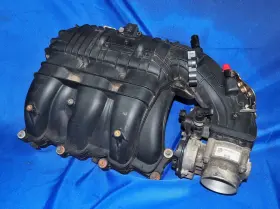
( Mounting Style: Bolt-on ), ( Color: Black ), ( Manufacturer Part Number: 9L8Z9424A ), ( Material: Plastic ), ( Vintage Part: No ), ( Placement On Vehicle: Front, Upper ), ( Fuel Type: Gasoline ), ( Type: Intake Manifold ), ( Oe/oem Part Number: 09 10 2010 11 2011 12, Mariner Milan, Mercury ), ( Engine Size: 3.5l ), ( Features: Bare ), ( Country/region Of Manufacture: United States )
Review FORD 3.0l Engine Intake Manifold Oem Damaged Tab fits ESCAPE FUSION 2009–2012
The Ford 9L8Z9424A intake manifold is an essential component of the 1.6L Duratec SI 16V DOHC engine found in select Ford Escape and Fusion models from 2009 to 2012. This manifold is responsible for supplying the engine with a steady flow of air and fuel to ensure efficient combustion. It is made of high-strength aluminum material, which contributes to the engine's overall performance, reduced weight, and improved fuel economy.
The intake manifold comes with five runners, each designed to optimally distribute air and fuel into the corresponding cylinder for enhanced power and torque output. The runners are equipped with Throttle Bodies (TBs) at the top, allowing the engine to respond quickly and smoothly to throttle input.
The manifold's compact design enhances engine bay space, while its robust construction facilitates strength and durability under high operating temperatures and pressures. This intake manifold is designed with tight emissions requirements in mind, ensuring effective and clean combustion for eco-conscious driving. Additionally, it is engineered with integrated charge motion control for improved throttle response and engine idle stability.
Upgrades and customizations to the Ford 9L8Z9424A intake manifold are widely available, including high-performance options to increase horsepower and torque. If you are looking to enhance the performance of your 2009-2012 Escape or Fusion with a more powerful and efficient engine, then upgrading your intake manifold could be the first step in the right direction. Replacement is occasionally required due to wear, damage, or engine upgrades, and our Ford 9L8Z9424A intake manifold is a reliable and cost-effective solution to ensure continued performance and reliability from your engine.
A Comparative Analysis of the Ford 9L8Z9424A 2009-2012 Escape Fusion 0L Engine Intake Manifold
Introduction:The intake manifold is a critical component of an internal combustion engine as it distributes the fuel-air mixture to the engine's cylinders. If your Ford Escape Fusion 0L engine requires a new intake manifold, you might be wondering whether to opt for the original equipment manufacturer (OEM) intake manifold or aftermarket alternatives. In this analysis, we'll outline the pros and cons of each option, culminating in a recommendation.
OEM Intake Manifold (Ford 9L8Z9424A): Pros:1. Exact fit and finish: OEM intake manifolds are designed specifically for your vehicle model, ensuring that all the components match perfectly, seamlessly integrating with the rest of the engine.
2. Warranty coverage: Ford's OEM warranty typically covers defects for a certain period after purchase, providing peace of mind for those concerned about potential manufacturing issues.
3. Fuel efficiency: Ford-engineered intake manifolds can optimize air and fuel mixture distribution for the specific engine, potentially increasing overall fuel efficiency.
4. Compatibility with other components: OEM intake manifolds are typically designed to work properly with other engine parts in the vehicle, eliminating potential compatibility concerns.
Cons:1. Cost: Original Equipment Manufacturer options often come with a higher price tag due to the brand reputation, impeccable fit, and various warranties.
Aftermarket Intake Manifold: Pros:1. Cost-effective: Aftermarket intake manifolds are often domestically or foreign-sourced, making them significantly more affordable than their OEM counterparts.
2. Variety: The aftermarket offers various intake manifold designs, which may provide additional benefits like racing capabilities, increased horsepower, or improved engine performance.
Cons:1. Quality inconsistencies: Aftermarket intake manifolds may not meet the same standards as OEM parts in terms of materials, fit, or durability, which could result in deteriorating performance or engine complications.
2. Compatibility issues: Depending on the specific aftermarket intake manifold you choose, there could be potential compatibility concerns with engine components or vehicles.
3. Limited or no warranty: Aftermarket parts often lack the same warranty coverage as OEM parts, leaving you responsible for issues that may arise.
Conclusion:In conclusion, both OEM and aftermarket intake manifolds come with their advantages and disadvantages. While OEM intake manifolds offer exact fit, great finishes, and manufacturer warranties, they can be more expensive. On the other hand, aftermarket intake manifolds are cost-effective but may come with quality inconsistencies, compatibility issues, and no warranty coverage.
Based on the information provided, a car owner should consider the specific priorities and circumstances of their situation. If your main concerns are affordability and the possibility of improved engine performance, the aftermarket intake manifold could be a suitable option. However, if you require a factory-built component with perfect fitment and the security of a warranty, the OEM intake manifold would be a wise investment.
Details:
LANSDOWNE MOTORSPORT, 160 E.
part #: 9l8z9424a prices
- $55.00-$135.99
specifications inputmanifolds:
- for models: Escape, Fusion
- for makes: Ford
- for years: 2009-2012
- mounting style: Bolt-on
- color: Black
- manufacturer part number: 9L8Z9424A
- material: Plastic
- vintage part: No
- placement on vehicle: Front, Upper
- fuel type: Gasoline
- type: Intake Manifold
- oe/oem part number: 09 10 2010 11 2011 12, Mariner Milan, Mercury
- engine size: 3.5l
- features: Bare
- country/region of manufacture: United States
payments inputmanifolds:
- other
- wallet: Google-pay
- credit card: Mastercard
offer inputmanifolds:
- started: September 26, 2024
- quantity: 1
- availability: In Stock
- options: Ship-to-home
- best offers: True
- sold: 0
general inputmanifolds:
- condition: Used
- Car Truck Parts Accessories > Air Fuel Delivery > Intake Manifolds
seller inputmanifolds:
- # reviews: 24021
- rating: 99.4%
- city: Lansdowne, Pennsylvania
shipping inputmanifolds:
- transit: 4-6 Days
- type: Fixed
- carrier: UPS
- class: Standard
- cost: $0.00
- service: UPS Ground
returns inputmanifolds:
- paid by: Buyer
- policy: Returns Accepted
- time: 30 Days
Ford 9L8Z9424A Is Similar To:
- Edelbrock 3848 Intake Elbow 90mm Throttle Body To Square-bore Flange Ls Or 5.0 Ford (27.5% similar) Recommend outbreak 90MM throttle body #350-3869 for optimum performance. Good looking intake, dealer display open box item, intake only as shown low ultra profile elbows. Outbreak throttle body elbows include a universal throttle cable bracket. These new elbows are the best way to adapt LS1...(June 4th, 2024)
- Edelbrock Intake Manifolds 2171 Performer Ford 351m 400 Aluminum Manifold Dual Plane (31% similar) Outbreak aluminum intake p/n 2171 - performer dual plane for 351M and 400 ford applications intake has been cleaned up is in as found condition blasted with natural unpainted finish shown excellent used one steel thread insert installed amounting bracket hole better strength no cracks or weld...(June 5th, 2024)
- Ford 329-01850 6.0l Engine Fuel Filter Supply Line Fits 03 04 F250 F350 Excursion (35.9% similar) 6.0L engine / fuel filter supply line fits 03 04 ford F250 F350 excursion item: item condition: good, used condition. For items sold with free shipping or flat rate shipping, the free shipping flat rate only applies when item is shipped to a address within continental USA...(June 5th, 2024)
- Weiand 8020wnd Stealth Intake Ford Small Block V8 (32.6% similar) Stealth intake manifold 221, 260, 289, 302 V8: V8;PORT size: 1.83 height 1.02 width ; height : front 4.35, rear 5.59 ; high rise dual plane design; square carburetor mounting flange; no erg provisions; power band: IDLE-6000 rpm;. Buyer pays return shipping. A signature is required on all ups...(June 6th, 2024)
- Edelbrock 7121 Performer Rpm Sb Ford 289 302 Intake Dual Plane 1500-6500rpm (28.9% similar) Tram has one of the largest collections reconditioned aftermarket oem performance intakes in mid-west. Brand: outbreak, part #: 7121, style: performer rpm, 1500-6500 application: ford 289-302, carb flange: dual 4150, special notes: no porting/repairs, condition: very nice. All intakes are...(June 6th, 2024)
- Ford Ds7z-9424-q Genuine Manifold Assembly Inlet (45.5% similar) Shipping carrier substitutions may be made at our determination in an attempt to reduce shipping cost the customer. Parts must be sealed in the original packaging. Photos of multiples are for display purposes only. Electrical parts are not returnable...(June 6th, 2024)
- Ford Hc3z 9424 A Hc3z 9424 A Manifold Asy Inlet For (43% similar) Designed specifically for trucks, trailers, and buses. HC3Z 9424 a manifold say inlet for ford: part number: manufacturer: ford. Manufactured following strict oe standards to work like the original component. Features a factory-like...(June 7th, 2024)
- Ford Truck 329-00179 6.4l Engine Mounted Fuel Filter Cap Fits 08 09 10 F250 F350 F450 F550 (27.6% similar) Engines and transmissions have a 90 day parts only warranty. For items sold with free shipping or flat rate shipping, the free shipping flat rate only applies when item is shipped to a address within continental USA. The only exception would be if the engine/transmission is a core unit and being...(June 8th, 2024)
- Trick Flow Tfs-51500002 86-95 Ford 5.0l 302 Track Heat Intake With Bbk Tb And Injectors Rails (26% similar) Please make reasonable offers given you are not paying for shipping. Plenum material: aluminum. Part type: intake manifolds, fuel injected. Brand: trick flow specialties. Runners included: no. I applied black wrinkle finish to the intake after sanding original silver original was not in...(June 9th, 2024)
- Ford 3c3z-9a675-ca 2006 6.0 F250 Upper Air Intake Cover (38.8% similar) Plastic mounting clips in second picture show all still intact, where your metal retaining insert into. Does have hose attached as seen in picture. Plenty of useful life left in this one. Ford upper intake air filter cover as seen in photo's. Please verify fitment into your truck is the...(June 9th, 2024)
- Ford 4l8e-9f792-bf Escape 3.0l V-6 Fuel Rail And Injectors Used (43% similar) I do not have any history on this part/these parts. Fuel rail #4L8E-9F792-BF. Sold in as-is condition. This is a used oem fuel rail and injectors for ford escape with 3.0L V-6 engine. Recommend replacing o rings...(June 9th, 2024)

5 offers $55.00–$135.99 USD
- Used. Offer #1 priced at $55.00 + $19.11 delivery = $74.11* total. All Parts are stamped or videoed in good working condition for return purposes. Might have scratches and scuff marks and some dirt nothing that would affect its proper functioning.+$19.11 shipping
- Used. Offer #2 priced at $135.99 + $0.00 delivery = $135.99* total. MILAN 10-11 3.0L, upper ESCAPE 09-12 3.0L, upper.FREE SHIPPING
- Used. Offer #3 priced at $120.50 + $0.00 delivery = $120.50* total. FUSION 2010 -2012 3.0L, upper. Model: ESCAPE.FREE SHIPPING
- Used. Offer #4 priced at $151.99 + $0.00 delivery = $151.99* total. INTAKE MANIFOLD, UPPER, 3.0L.FREE SHIPPING
- Used. Offer #5 priced at $70.00 + $45.48 delivery = $115.48* total. I look forward to getting you fixed up and in tip top shape.+$45.48 shipping